
June 24, 2026
How Strategic Choice-Making© Works
From Charger to Civic Energy Node.
Related sites
Download dissertation
Authors
Deaa Bataineh
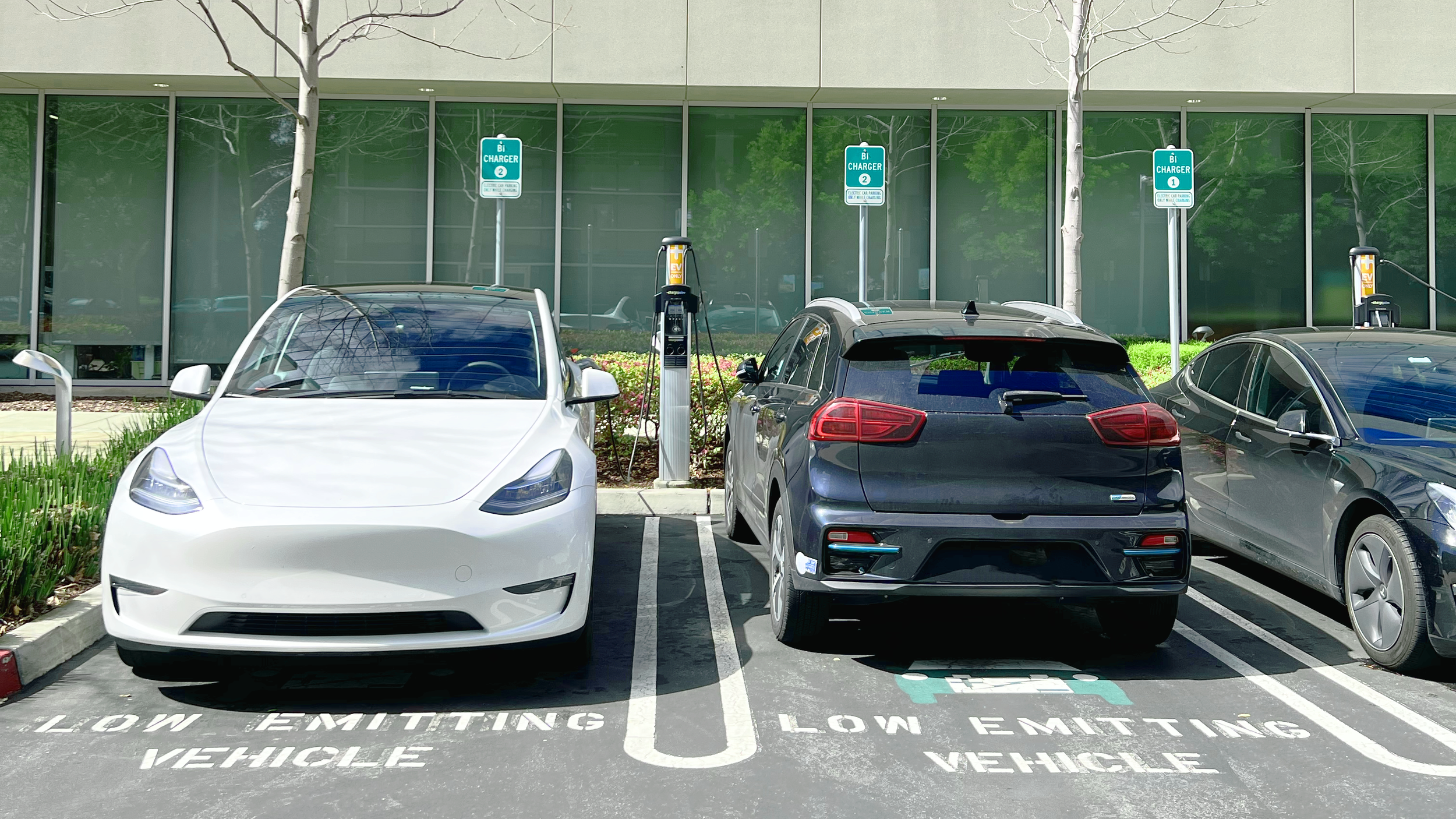
A charging station looks simple from the outside.
A car parks. A cable connects. Energy moves from the grid into a battery. A driver waits, pays, and leaves. From this angle, the charging station appears to be just another technical object in the landscape of clean mobility.
But this is not really what it is.
An EV charging station is becoming one of the small but critical sites where the energy transition is being negotiated. It touches the electricity grid, the future of mobility, real estate, payment systems, data platforms, public incentives, private investment, urban planning, and everyday routines. It raises questions of access: who gets to charge, where, at what speed, at what price, and under what conditions? It raises questions of sustainability: when is the energy clean, how is demand managed, and what happens to the grid when millions of vehicles plug in? It also raises questions of value: who owns the station, who operates it, who controls the data, and who benefits from the infrastructure being built?
It is an everyday infrastructure because it enters the rhythm of ordinary life. It is infrastructure because, once enough people depend on it, it becomes part of the background condition that allows life, work, and movement to happen. Like roads, water pipes, payment rails, and mobile networks, it becomes most important when people stop noticing it—until it fails, excludes them, or charges them differently.
The design challenge, then, is not simply how to make a better charger. It is about how to make better choices around the charger.
This is where Strategic Choice-Making© becomes useful as a framework.
Strategic Choice-Making© is a way for institutions to move from large forces—such as clean energy, digitization, equity, financialization, and economic resilience—toward concrete choices that can be designed, tested, governed, and scaled. It helps us ask how a broad transformation becomes operational. Not in slogans. Not only in strategy documents. But in features.
A feature can be a pricing rule, a charging speed, a payment option, a reservation system, a data-sharing protocol, a siting decision, a maintenance dashboard, a grid-balancing mechanism, or a bidirectional charging capability. These may seem small. But in complex systems, small features can redirect major flows.
A charging station, for example, does not only move electricity. It can move money, data, trust, access, carbon, and institutional responsibility. The question is whether those flows are being shaped deliberately.
Before the framework: reading the system
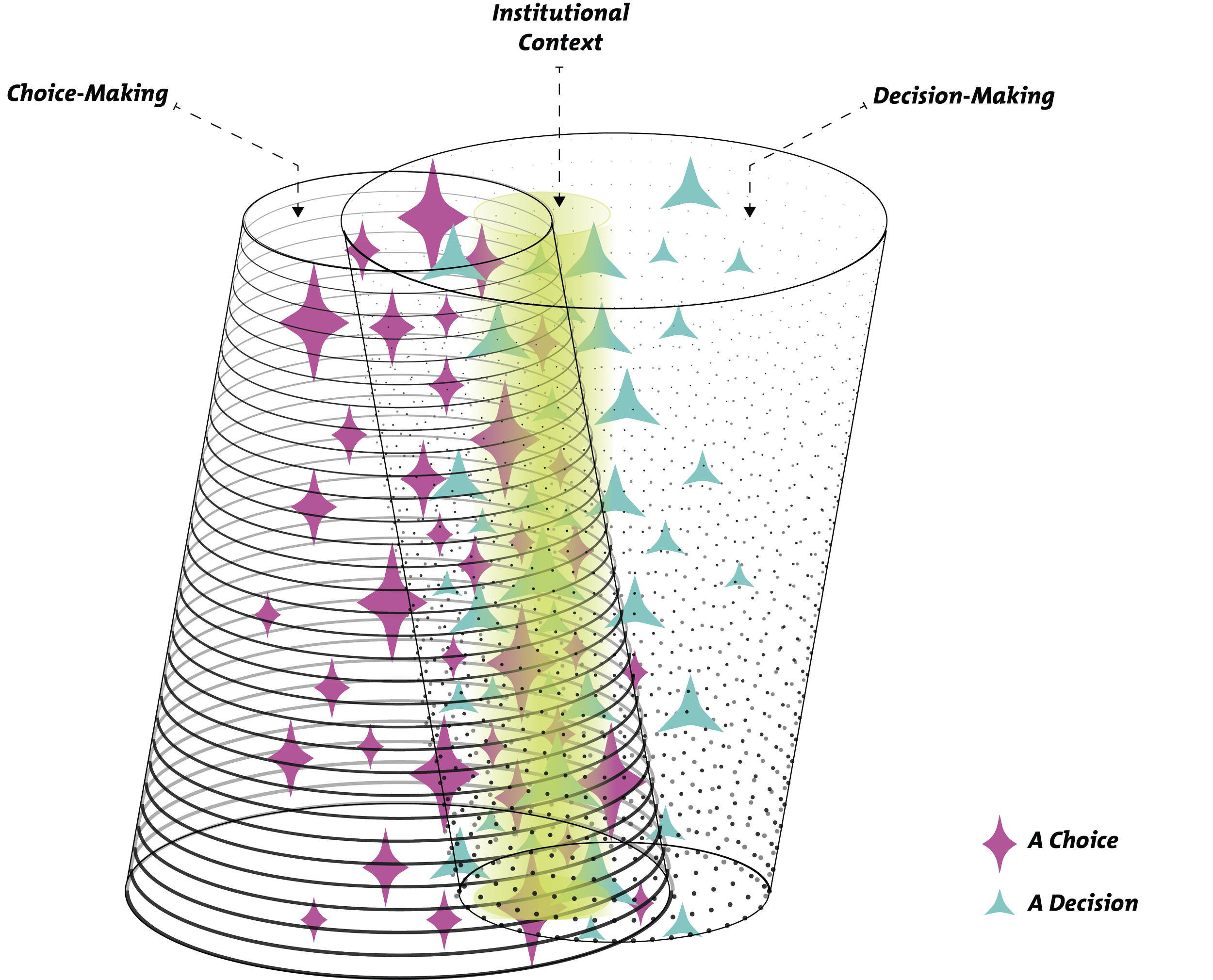
The Strategic Choice-Making Model
How do we choose the right features to carry the weight of our purpose, given the forces shaping our world?
To answer, SCMM starts by mapping:
Institutional Purpose – Long-term intent that guides what the institution values and invests in.
Macro Forces – Sustainability, equity, digitization, deglobalization, and financialization. These shape the context and constraints.
When purpose meets forces, we design:
Strategic Features – the practical translation of intent, the mediating design elements—interfaces, defaults, policies, rules, offerings—that turn intent into infrastructure.
Flows – The resource, relational, and informational movements that these features carry, redirect, or manage.
Why this approach scales
Across sectors, and when products and services are reframed at the intersections of systems, one pattern holds: features are leverage points. When chosen and combined with intent, they re-orient flows—and futures. Examples of features:
Mobility / Energy
Before: Chargers cluster in affluent areas; grid strained at peaks.
After (features): Equity siting + dynamic pricing + bidirectional charging → revenue to underserved sites, smoother load, better access.Digital Finance
Before: Credit scoring excludes informal workers.
After (features): Alternative ID + contextual credit pathways + transparent data consent → inclusion without predatory risk.
Food Systems (airports, hospitals, schools)
Before: One-size menus; high waste; opaque sourcing.
After (features): Pre-select modules + nearby vertical-farm contracts + waste telemetry → lower waste, local jobs, healthier choices.
Because SCMM measures flows, it lends itself well—from pilots to platforms, from products to policy. It provides a disciplined way to script possibilities so platforms, infrastructures, and institutions can finally keep pace with the futures we deserve..
ABOUT THE AUTHORS:

Deaa Bataineh is a designer, researcher, and consultant specializing in innovation at the intersection of systems, design, and strategy. He holds a PhD from the Institute of Design (ID) at Illinois Institute of Technology, where he developed the Strategic Choice-Making© model. His work addresses complex infrastructures—such as EV charging, emergency response, and digital payments—as platforms for equitable and sustainable transformation. He serves on the Aux Board of the Design Museum of Chicago, co-founded the design department at Jordan University of Science and Technology in Jordan, and hosts the podcast espresso?. For more visit Deaa’s website here.